
Archive
October 7, 2026
▾ Hover for summary ▾ Tap for summary
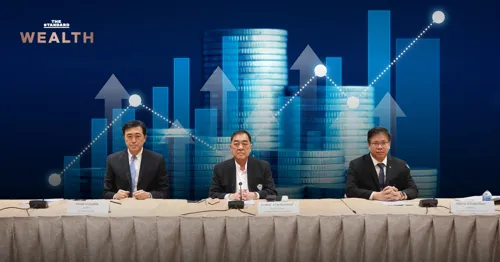
The Joint Standing Committee on Commerce, Industry and Banking (กกร.) kept its 2026 GDP growth forecast at 2.1-2.5%, with exports growing 1.2-1.6% and inflation at 2.5-3.0%. It warned that flooding and airport service problems could hurt tourism and visitor confidence in the late-year high season, through to early next year. It also asked for private-sector input on flood planning and recovery support for affected businesses. For a small business, plan for weaker tourist flow in the high season and watch for flood-related support schemes; no direct action is required yet.
▾ Hover for summary ▾ Tap for summary
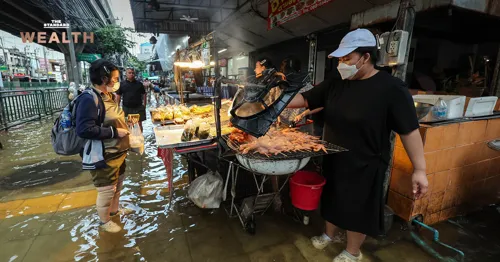
Top's and Makro say their main distribution centres were not hit by the Bangkok floods and they kept deliveries running. Top's stocks 20+ days of essentials, adds 30-50% more delivery trucks and runs 24-hour teams. Makro switched to large trucks for flooded routes and checked suppliers in advance for delivery delays. For a Thai SME: if you supply modern-trade chains or depend on Bangkok routes, expect bigger, earlier restocking pushes and plan your own stock buffers and delivery backups for flood periods.

▾ Hover for summary ▾ Tap for summary
The Energy Ministry says it may collect a refining-margin windfall (round 8) before end-October 2026, after seven earlier rounds raised about THB 28 billion. Margins sit well above the normal USD 15-20/barrel band. The ministry says borrowing is not its first option because it would add to public debt, though the oil fund's deficit is nearing THB 100 billion. Fuel-price pressure is likely to persist. Keep fuel and transport cost budgets under review into November, and watch for any excise-tax cut on B20/E20, which has no timeline yet.

▾ Hover for summary ▾ Tap for summary
The Federation of Thai Industries says flooding in the eastern region has halted some auto-parts factories, and assemblers are running on existing stock. If floodwaters have not cleared by 12 October, assembly lines may stall for lack of parts. Estimated industry damage is nearly 6,000 million baht across about 190 factories, and the figure is not final. Suppliers and subcontractors in the auto chain should check stock levels, delivery schedules and alternative transport now. Some industrial estates reportedly show falling water, but upstream water and rain remain uncertain.

 Empower businesses to thrive in the digital age.
▾ Hover for summary ▾ Tap for summary
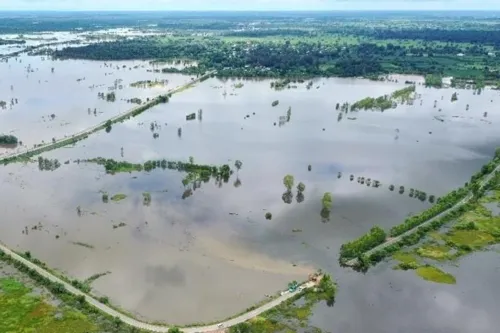
Kasikorn Research estimates floods from 25 Sep to 14 Oct 2026 damaged about 12,000 million baht of main-season rice output, covering roughly 1.5 million rai (about 2.5% of national main-season area, 19% of Chao Phraya basin). Rice prices could rise about 18% year on year. Further rain on 5-7 and 11-14 Oct and extra water releases from the Chao Phraya dam could raise levels in 11 low-lying central provinces by a further 40-70 cm. Restaurant and food businesses should expect higher rice costs and plan supplier contracts now; businesses in flood-hit central provinces should check logistics and stock exposure.
▾ Hover for summary ▾ Tap for summary
The Revenue Department has proposed a royal decree (cabinet approved the principle on 6 Oct 2026) giving companies and partnerships a 2x deduction on booth rental and participation fees for domestic exhibitions, trade fairs and MICE events. It covers events starting 6 Oct 2026 to 31 Dec 2027, and payments made in that window. If you plan to exhibit at domestic fairs, budget for them in this period, keep receipts, and check with your accountant. The decree is not yet final, so confirm the final wording before relying on it.

▾ Hover for summary ▾ Tap for summary
The SEC has filed criminal complaints with the Economic Crime Suppression Division against Ass Sure Technology Co. and four executives over running the unlicensed crypto exchange VCEX (Vcex.io). The Digital Ministry will block the platform from 7 Nov 2026. For a Thai business, the practical point is to check any crypto trading or payment counterparty against the SEC Check First app before dealing with them, since unlicensed platforms get no legal protection and carry fraud and money-laundering risk.

▾ Hover for summary ▾ Tap for summary
Thailand's Foreign Ministry changed its visa-exemption (free visa) rules, effective 15 September. Investors were worried it would make business trips harder and hurt FDI. Deputy PM Ekniti Nitithanprapas says business visas will stay easy, and he has ordered Thai embassies to help investors. The article gives no details of the new rules. If your business depends on foreign buyers, partners or visitors, check with them whether their entry paperwork has changed, and plan for a business visa if they need one.
 Your real translator for LINE and Discord.

▾ Hover for summary ▾ Tap for summary
SCB EIC expects Asian economies to grow strongly in 2026, driven by electronics and global AI investment. Risks: high oil prices from the Middle East conflict, which can feed into production costs and inflation, possible rate hikes in some countries, and further US tariff uncertainty. For Thai SMEs, this is background for planning. Watch fuel and energy costs in your budget, and look at the regional opportunities the report names: expanding sales into faster-growing Asian markets, and linking into regional supply chains. The report also says Thai entrepreneurs need to move into higher value-added activities.

▾ Hover for summary ▾ Tap for summary
Deputy PM and Finance Minister Ekniti says the cabinet has noted the EV Board's resolution and the excise tax rate on imported EVs should be settled in 1-2 weeks. The aim is to cushion car investors hit by trade-war tariff gaps. Business visa rules are also changing, but the government says business travellers will get easier Business Visa access, not a barrier. If you import, sell or supply EVs or auto parts, watch for the final rate; if you run a business with foreign partners, check whether your visa arrangements for short trips still work.

▾ Hover for summary ▾ Tap for summary
IMF chief Kristalina Georgieva said the annual meetings, hosted in Thailand next week, will focus on three risks: fast-moving AI, persistently high energy prices, and record public debt. She said energy costs are feeding into fertiliser, food and industrial input prices, and diesel and refined fuel retail prices are at record highs. For a Thai SME, this signals that fuel, input and food costs may stay elevated, so review diesel-dependent logistics and supplier pricing this quarter. No specific policy measure for Thai businesses was announced.

▾ Hover for summary ▾ Tap for summary
ThaiBMA says the credit spread on Thai corporate bonds is at its lowest in 6 years. Thai government bond yields rose less than US yields, and the 5-year AAA corporate bond yields 2.06% vs 1.80% for the government bond. Policy rate is 1.00%, and the market expects it to hold at the 28 October meeting. For a small business this is mainly background: large firms are borrowing cheaply through bonds and may compete for bank lending, so SME loan rates are not expected to fall much from this. Watch the baht, since US yields are pushing up Thai yields and foreign bond products carry currency risk.

 Want to buy or sell a business?
▾ Hover for summary ▾ Tap for summary
Raspberry Pi raised prices on its 2GB Pi 4 and Pi 5 boards by US$12.50 (about 420 baht) on 1 October 2026. The 1GB models and Compute Module 2GB were not raised. Thai reference prices from Cytron are 2,578 baht (Pi 4) and 2,960 baht (Pi 5), but both were out of stock when the article was written. The maker asks buyers to use only official Thai distributors (Cytron, GLOBALByte) to avoid resellers' markups and mismatched products. Only relevant if your business builds devices or products on these boards: budget higher costs for 2GB models, or consider 1GB models if they meet your needs.

▾ Hover for summary ▾ Tap for summary
Deputy PM and Finance Minister Ekniti says the excise tax rates for electric vehicles will be finalised within 1-2 weeks. The cabinet on 6 Oct approved the EV policy board's resolution to use excise tax measures, responding to concerns from foreign investors, including Japanese, about trade-war effects and unequal import tariffs. The article gives no final rates. For an SME in the EV, auto parts or dealership chain, this is the week to watch for the numbers and to check how they affect your pricing and import costs.
▾ Hover for summary ▾ Tap for summary
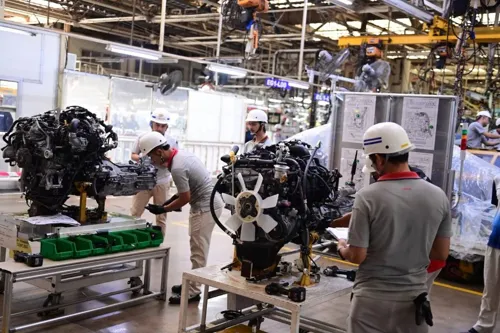
Toyota's three Samut Prakan plants were not flooded directly, but some flood-hit suppliers cannot deliver parts, so production is affected. The Commerce Minister ordered the Industry Ministry to trace bottlenecks across the chain, starting with Amata industrial estate. Proposals to waive import duties on machinery and parts for flood repairs, plus extra tax deductions for repair costs, are under consideration only and are not yet in force. If you supply auto or food manufacturers, check your delivery status and keep records of flood losses and repair costs in case support measures are approved.

▾ Hover for summary ▾ Tap for summary
Thailand hosts the 2026 IMF and World Bank Group annual meetings (AM2026). The Finance Ministry says the Queen Sirikit National Convention Center, 21 hotels and the airport-to-venue route had no standing floodwater, and that the city has drainage plans and trigger points for heavy rain. Forecast: heavy rain and storms on 10-11 Oct (30-50 mm, short bursts), easing 12-16 Oct. For a Bangkok SME, expect possible disruption to traffic and deliveries around 10-11 Oct, and check your own flood contingency plan for those days.
 Together GoWeGo! Ferry tickets in Thailand.

▾ Hover for summary ▾ Tap for summary
ThaiBMA reports corporate bond issuance in the first nine months of 2026 fell 1.61% to 629,662 million baht. Large firms are switching to bank loans because banks are competing hard on rates, so the gap between bank and bond borrowing costs is narrow. Bond yields on Thai government paper have edged up, but private borrowing costs have not risen much. For a small business, this means bank credit is currently competitively priced; it is worth comparing loan offers now. The main risk flagged is baht and US-Thai yield spread pressure, which is not yet a major outflow issue. No direct action is required.

▾ Hover for summary ▾ Tap for summary
Thai Durian Association says flood damage in Chanthaburi and Rayong is about 40,000 rai on preliminary figures, likely understated because farmers outside the registry are not counted. The trees themselves are the concern, not current fruit, since Chanthaburi has no crop out now. October-November is the bud-preparation period, so ongoing waterlogging matters for next season. Export impact cannot be confirmed until post-flood surveys show how many trees died or were badly damaged. For durian-linked suppliers and buyers, plan for tighter supply next season, and register any damage with the provincial agriculture office early, since the process is slow.
▾ Hover for summary ▾ Tap for summary
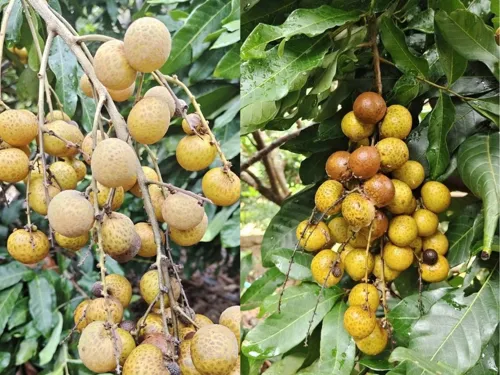
Heavy rain and flooding in the east (Chanthaburi, Sa Kaeo) split longan skins and dulled colour, so China-export grade fell from about 35 baht/kg at season start to 20-22 baht/kg; orchard-gate prices are 12-14 baht/kg. Contractors who pre-bought orchards at 28,000-30,000 baht/ton can resell for only about 25,000, so many are renegotiating with growers for 10-20% cuts. The Department of Internal Trade plans a limited buying scheme through three Soi Daow cooperatives, but the funding is small (about 300 tonnes last year). If you buy, sell, or supply longan, check contract prices and cash flow now and expect delayed harvests where terms are not agreed.

▾ Hover for summary ▾ Tap for summary
The Energy Ministry says it may collect a windfall levy on refinery margins for the 8th time before end-October 2026, after 7 rounds raised about 28,000 million baht. Refinery margins are above the normal 15-20 USD/barrel range. Ministry says borrowing is not the first option, so the fuel fund may lean on levies and tax changes instead. No firm timing or amount is set. For a Thai SME, the practical effect is that fuel price relief may be funded by refiners rather than new debt, but whether the fund stays solvent depends on margins. Plan fuel costs with uncertainty; the Finance Ministry's excise cut for B20/E20 has no set end date.

 Stop running your company on Excel.