
Archive
August 17, 2026
▾ Hover for summary ▾ Tap for summary
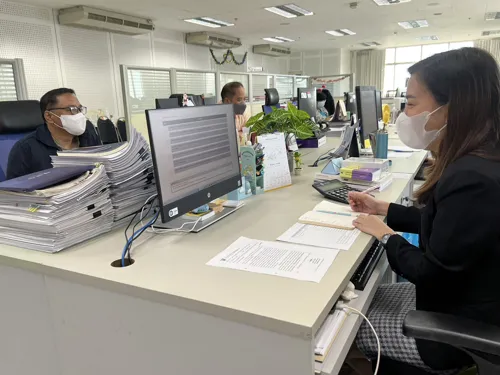
The Department of Business Development reports 7,512 new businesses registered in July 2026, down 5.85% from June and 2.57% from July 2025. Registered capital rose to 53,647 million baht, but mostly because one energy company (Banpu, 40,496 million baht) registered. Year to date, new registrations are up 1.43% (52,285 firms), while dissolutions are up 13.72%. Foreign investment permits rose 37% in capital to 219,208 million baht over seven months. Relevant mainly as market context: online retail, restaurants and clothing retail registrations grew fastest, which may mean more competition in those segments.
▾ Hover for summary ▾ Tap for summary
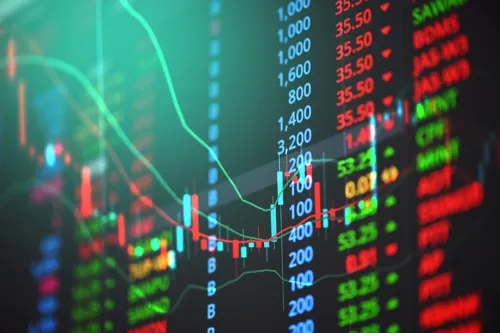
The SET placed 12 listed companies under SP (temporary trading ban) from 17 August 2026 because they could not file financial statements on time. The list includes CV, ECF, EMPIRE, GRAND, HPT, KWI, META, MILL, MVP, PF, ROH and SAM. For a small business this matters mainly as a warning: if you supply, lend to, or hold shares in any of these firms, check their filing status and your payment or credit exposure. Late filing is a signal of possible financial stress.

▾ Hover for summary ▾ Tap for summary
The Commerce Ministry's Business Development Department found 35 companies, all 100% Chinese-owned, registered at homes in four Sakon Nakhon districts. A local broker paid villagers 500-1,000 baht for copies of house registration and ID cards. None of the addresses had an office or business activity, and the homeowners did not know. The DBD says it will check registrations in all areas for nominee links. For a Thai SME, the practical steps are: do not hand out house registration or ID copies to anyone without knowing the purpose; check whether your own address is registered to companies you don't run; and report any suspicious use to the Commerce Provincial Office or DBD Call Center 1570. Expect tighter checks on company registrations.

▾ Hover for summary ▾ Tap for summary
Thailand's GDP grew 1.9% year on year in Q2 2026, down from 2.8% in Q1 and the lowest among ASEAN countries listed (Vietnam 8.4%, Malaysia 6.0%, Singapore 5.9%, Indonesia 5.3%, Philippines 2.3%). The slowdown was driven by weaker private consumption, lower government spending and a fall in public investment, with the Middle East conflict hitting Q2 hardest. NESDC raised its 2026 full-year forecast to 2.0-2.5% (midpoint 2.2%), citing better exports and tourism, stronger private investment and lower inflation. For a small business, expect cautious customer spending through the rest of the year; keep sales and cash-flow plans conservative rather than assuming a sharp rebound.

 Empower businesses to thrive in the digital age.

▾ Hover for summary ▾ Tap for summary
The Department of Business Development linked Land Department records with its company registry and found 36,277 Thai-registered companies with foreign shareholders holding title deeds nationwide. 31,516 of them have foreign stakes of 49% or less and remain Thai legal entities. The department says a foreign stake under 49% is legal, but it will screen for nominee arrangements where Thai shareholders hold shares with money that is really foreign. The focus is Bangkok, surrounding provinces and 10 tourist provinces, where 35,154 such companies are concentrated. If your company has foreign shareholders or buys or leases property through a company, check that the Thai shareholders genuinely invest and run the business, and keep records of funding sources. Nothing new is required yet, but scrutiny is coming.

▾ Hover for summary ▾ Tap for summary
Thailand's commerce minister Supajee flies to Washington on 30 Aug-1 Sep 2026 to push the ART reciprocal trade deal. Thailand says it will hold firm on three red lines: pork with ractopamine, security, and 100% foreign ownership in some sectors such as telecoms. Section 301 duties on autos and parts, rubber products and machinery are still pending; Thailand hopes its rate will be close to rivals'. About 72% of Thai exports to the US already get the extra 12.5% Section 301 tariff waived, and Thailand is seeking exemptions for 7 more groups (78 tariff codes), including food, electronics, autos parts and medical goods. Exporters in these sectors should watch the outcome and plan for the possibility of tariffs on the remaining 28%.

▾ Hover for summary ▾ Tap for summary
Thailand's Q2 GDP grew 1.9%, with inflation up to 2.7% (from -0.5% in Q1) due to higher energy and transport costs from the Middle East war. Private consumption slowed to 1.9% from 3.3%. Private investment rose 13.4%, helped by BOI's Thailand Fast Pass. Deputy PM Ekniti says phase 2 of the Thai Chuay Thai Plus stimulus will be decided in Q4, after phase 1 ends in Q3. For an SME, plan for higher input and freight costs and softer domestic demand; phase 2 of the stimulus is not yet confirmed, so don't budget for it.

▾ Hover for summary ▾ Tap for summary
Thai BOI has approved 42 data-centre projects worth about 750,000 million baht for 2024-2026, with another 36 requests (about 728,000 million baht) filed in 2025. Current data-centre power use is about 300 MW, and planned projects could push demand to 3 GW, nearly 10% of Thailand's generation. AI data centres use 5-10 times more power than ordinary ones. An IMC Institute expert warns that without power planning and green-energy obligations on investors, higher demand could affect ordinary electricity users. For a small business, this is a long-term electricity-cost watch item, not an action item today.
 Your real translator for LINE and Discord.
▾ Hover for summary ▾ Tap for summary
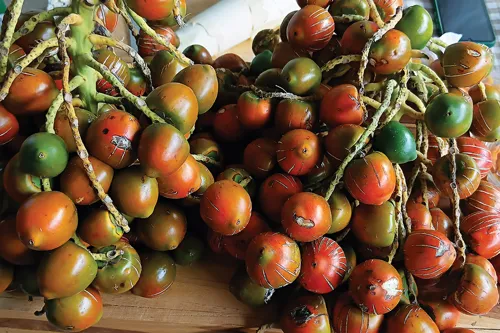
Chomphu Samakkhi credit union (Chiang Mai, about 700 million baht in funds) reports NPLs up to 150 million baht as longan prices collapsed and fertiliser costs rose. Members can pay interest only for the first 6 months under a debt restructuring scheme, extendable. Loan rates are graded A 6.50%, B 7.50%, C 8.50% a year. The co-op is working with the Ministry of Agriculture on a pilot to shift growers from longan to peach palm. For SME owners in agricultural areas: loan terms and rate grading show how local lenders are pricing risk, and longan-linked income is under pressure.

▾ Hover for summary ▾ Tap for summary
Thailand's Q2 2026 GDP grew 1.9%, down from 2.8% in Q1. Inflation rose to 2.7% (from -0.5%) on Middle East war energy costs, and private consumption slowed to 1.9%. The finance minister says the first phase of the Thai Yuu Thai Plus handout scheme ends in Q3, and whether it continues in Q4 is still undecided. Plan cash flow for weaker consumer demand and higher costs. Private investment grew 13.4%, mainly in electronics, AI and clean energy. Government plans about 200 billion baht in energy transition spending on rooftop solar, grid, storage and EVs.

▾ Hover for summary ▾ Tap for summary
Thailand's Q2 GDP grew 1.9%, down from 2.8% in Q1; seasonally adjusted it contracted 0.2% quarter on quarter. NESDC raised its 2026 forecast to a midpoint of 2.2% (range 2.0-2.5%). Tourist arrivals fell 3.8%, and the current account posted its first deficit in 8 quarters because of higher oil and gold prices. NESDC flagged SME NPLs at 9% of loans and falling SME lending in manufacturing, construction, and wholesale/retail as risks, so expect tighter credit scrutiny. Plan for a soft domestic demand backdrop and rising input costs this year.

▾ Hover for summary ▾ Tap for summary
Chinese EV makers are investing in Thailand (BOI cites 16,000 jobs already), while demand for combustion-engine parts is shrinking. The government is now setting local-content rules for some EV projects and linking Thai parts makers to new EV producers. The World Bank says many Thai parts makers can move into EV supply chains, but Tier 2 and Tier 3 firms need support, since high-voltage components and chargers are still mostly made abroad. If you make engine, gear, or exhaust parts, look at whether you can supply EV batteries, motors, power electronics or wiring, and watch for BOI local-content conditions on EV projects.

 Want to buy or sell a business?

▾ Hover for summary ▾ Tap for summary
Thailand's Q2 2026 GDP grew 1.9% YoY, down from 2.8% in Q1, and contracted 0.2% QoQ seasonally adjusted. Private consumption slowed to 1.9% as consumer confidence fell to 50.3, a 14-quarter low. Government spending and public investment both contracted, and manufacturing grew only 0.1%. Construction nearly stalled at 0.1%. NESDC expects Q3 to improve as energy and commodity price pressure eases, and raised its 2026 forecast to 2.0-2.5% (midpoint 2.2%). Exporters of electronics are the bright spot, with exports up 17.6%. For a domestic-facing SME, plan for weak consumer demand in the near term and avoid assuming a quick rebound.
▾ Hover for summary ▾ Tap for summary
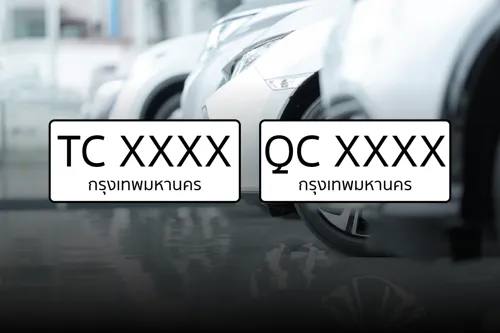
The Department of Land Transport says TC plates are for pre-production prototype vehicles (permit valid 180 days) and QC plates are for quality-test samples taken before sale (permit valid 90 days). Either way, a copy of the permit must stay in the vehicle during testing, insurance proof is required, and the driver's licence must match the vehicle type. Breaking these conditions carries a fine of up to 2,000 baht. Relevant mainly to car and motorcycle makers, importers, or anyone dealing with test vehicles.
▾ Hover for summary ▾ Tap for summary
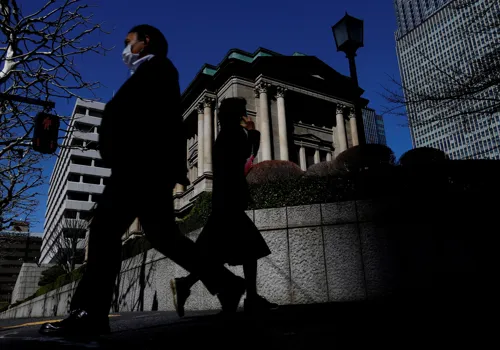
Japan's real GDP grew 1.1% annualised in Q2 2026, below the 2% forecast, as business investment fell and consumer spending stayed flat under Middle East tensions and high living costs. Markets still put about 80% odds on a BOJ rate hike at the 18 September meeting. The yen sits near 159 per dollar, weaker than its 10-year average of 126. For a Thai SME this is background: a stronger yen is not expected soon, and Japanese tourist and import demand may soften. Watch for Japanese-linked costs or export orders, but no action is needed yet.

▾ Hover for summary ▾ Tap for summary
Deputy Finance Minister Ekniti has ordered the Excise Department to finish a restructuring of car excise tax by end-September. The aim is to narrow the gap between imported cars from FTA countries (near-zero import duty) and locally produced cars, after manufacturers said they were being treated unfairly and some might move production to Indonesia. Some car types will see higher tax, which would make imported vehicles more expensive. The change would be made through a ministerial rule under the Excile Tax Act. For car dealers, parts suppliers and auto-related SMEs, check pricing and sourcing plans now; the final rates are not yet announced.
 Together GoWeGo! Ferry tickets in Thailand.
▾ Hover for summary ▾ Tap for summary
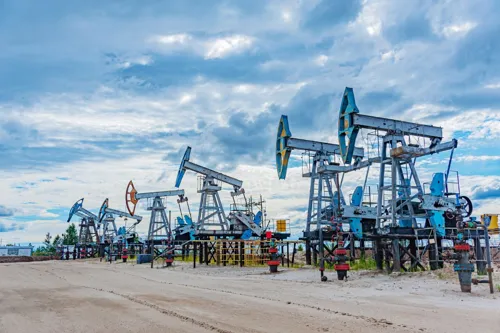
Brent rose to US$88.52 and West Texas to US$82.40 a barrel on 14 Aug 2026 after the US signalled new economic sanctions on Iran. Attacks on ships in the Strait of Hormuz continue and RBC sees no sign of a near-term peace deal, so supply risk stays high. For a Thai SME, this points to possible pressure on diesel and fuel prices, freight and transport costs. Review fuel and shipping budgets and pricing for the coming quarter. Prices can move quickly, so check local pump prices before committing to long fixed-price contracts.

▾ Hover for summary ▾ Tap for summary
Thai gold prices rose 150 baht by the morning of 17 Aug 2026 (per the Gold Traders Association, 09:02). Bar gold: buy 68,700, sell 68,900 baht per baht-weight. Jewellery gold: buy-back about 67,325.56, sell 69,700. World spot is about US$4,396 per ounce. If you hold or sell gold stock or jewellery, note the gap between buy-back and sell prices (about 2,400 baht on jewellery). Check prices again before any buy or sell decision, since they move through the day.
▾ Hover for summary ▾ Tap for summary
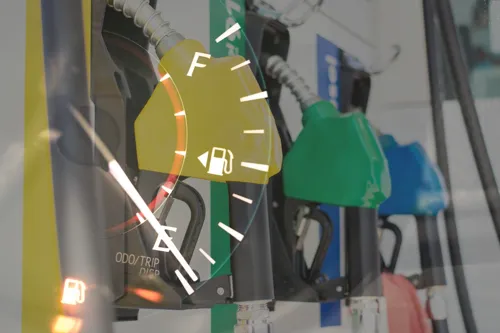
Bangchak's reference prices for 17 Aug 2026: high-speed diesel 37.54 baht/litre, B20 diesel 32.54 baht (up 0.85 baht from the previous day), and gasohol 95 at 36.84 baht. Prices are before Bangkok's local tax and may differ at the pump. Tomorrow's prices take effect at 05:00. For fleets, delivery vehicles and generators, check the daily movement and update fuel cost assumptions in quotes.
August 16, 2026
▾ Hover for summary ▾ Tap for summary
Tanker attacks have slowed traffic through the Strait of Hormuz, per shipping data. Watch for fuel and freight cost increases and possible delivery delays on imported goods.

 Stop running your company on Excel.