
Archive
October 16, 2026
▾ Hover for summary ▾ Tap for summary
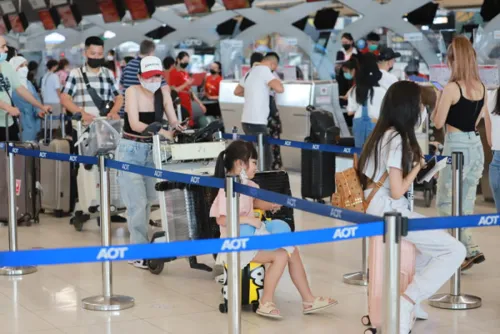
From Friday, Thai airports can open checked bags suspected of carrying prohibited items without the owner present. Authorities leave an inspection notice inside the bag and record the check on video. For business travellers and staff who fly with samples, stock or documents, keep valuables and important papers in hand luggage, and do not pack power banks, explosives or firearms in checked bags.

▾ Hover for summary ▾ Tap for summary
IDC reports global smartphone shipments of 255.3 million units in Q3 2026, down 22% year on year, the steepest drop it has recorded. Memory prices rose about 350% over the past year and are expected to climb further, squeezing phone makers' margins. IDC expects the slump to continue through 2027, with recovery in 2028 at the earliest. For a Thai SME, expect higher and fewer phone and device options, and possibly higher costs for electronics, POS terminals or devices you buy or sell.

▾ Hover for summary ▾ Tap for summary
The IMF kept its 2026 global growth forecast at 3.1%, but says growth now leans heavily on AI investment while energy and food prices rise. Interest rates may stay high for longer, so government borrowing costs could climb. Thailand's finance minister named three pressures: imported oil prices hitting living costs, companies reshuffling supply chains away from geopolitical blocs, and rising bond yields that make government borrowing dearer. No specific policy change for SMEs was announced. For planning, keep cash buffers and reduce debt where possible, and watch fuel and supply-chain costs over the coming year.
October 15, 2026

▾ Hover for summary ▾ Tap for summary
Labour Minister Julapun Amornvivat said nullifying the Social Security Board election, won by the Progressive Social Security team, is not under consideration. No formal complaint has been filed; calls to annul have so far stayed online. He said turnout rose about 500–600% compared with the first election in December 2023, and that candidates are already vetted for political office and party executive roles. Party membership alone is not a bar. For a business owner, the board's composition may shift how Social Security rules and employer contributions are handled, but nothing changes for you right now.

 Empower businesses to thrive in the digital age.

▾ Hover for summary ▾ Tap for summary
AI adoption among emerging-market venture capital and private equity firms rose to 71% this year (from 39% last year), yet over half have only limited deployments in selected business functions. Key barriers remain skills gaps and regulatory ambiguity. Success stories include CLPRAP's medical imaging platform deployed across 300+ applications globally, and fintech and semiconductor solutions enabling cost-efficient cross-border transactions and embedded intelligence. The opportunity lies in localizing AI to market conditions, languages, and customer needs—particularly for SMEs seeking productivity gains and cost reduction.
▾ Hover for summary ▾ Tap for summary
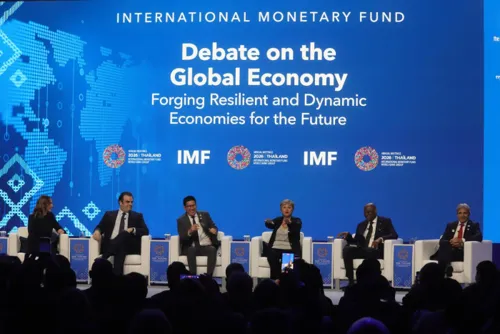
The IMF kept its 2026 global growth forecast at 3.1% but warned of persistent inflation, rising energy and food prices, and possibly tighter central bank policy that raises borrowing costs. Finance Minister Ekniti said Thailand, as an oil importer, faces higher energy costs for households and businesses, and that vulnerable businesses need more support. Thailand's 10-year bond yield is about 2.3%, relatively stable. For a small business: review fuel and energy costs, plan for possible higher loan rates, and watch whether your sector faces pressure from shifting supply chains.

▾ Hover for summary ▾ Tap for summary
The Tourism Authority of Thailand is running two year-end domestic travel schemes. The first gives Thai travellers 500 baht off each domestic flight segment, capped at 1,000 baht per person for round trips, first come first served, with no registration and unlimited use. TAT plans 112,000 subsidised seats across seven airlines. The second subsidises non-scheduled bus and van transport through nine tourism partners. Analysts expect Q4 hotel bookings to keep growing year on year. Hotels, tour operators and transport providers can tie packages or promotions to these subsidies. Note that the US-Iran conflict and high oil prices remain the main risk.
▾ Hover for summary ▾ Tap for summary
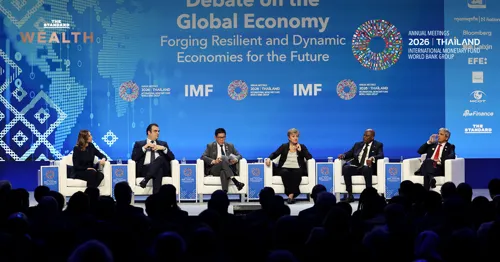
At the IMF–World Bank meeting in Bangkok, Deputy PM and Finance Minister Ekniti Nitithanprapas named four pressures on Thailand: high energy prices, supply-chain fragmentation, rising global rates and bond yields, and AI reshaping winners and losers. He said Thai 10-year government bond yield is about 2.3%, below US and European levels, but that SMEs are among the most exposed and need help adapting. No new SME measure was announced. Practical implication: stress-test fuel and input costs, and look at ASEAN customers as a hedge against export shocks. Intra-ASEAN trade is about 22%, versus about 60% in the EU.
 Your real translator for LINE and Discord.
▾ Hover for summary ▾ Tap for summary
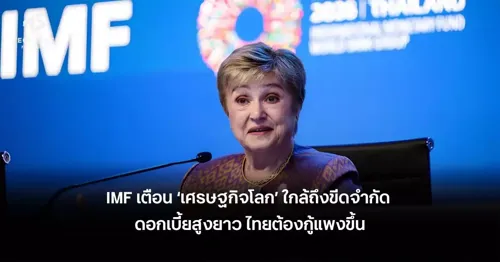
The IMF, speaking in Bangkok, expects global growth of about 3.1% in 2026, with Middle East tensions pushing energy prices up. Bond yields in developed economies are at multi-decade highs, and those yields set the reference for global lending rates. The IMF says rates will likely stay high for a while, and Thailand's borrowing costs rise with the global benchmark even though its own spread has not widened. For an SME, plan for loan and credit-line costs staying elevated, and treat energy and food cost increases as ongoing rather than temporary.
▾ Hover for summary ▾ Tap for summary
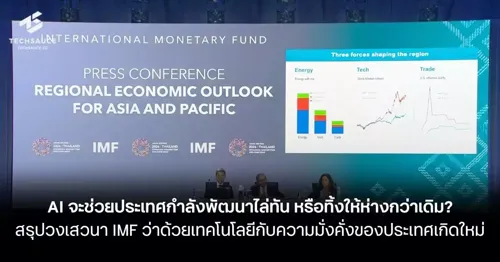
The IMF's October 2026 Regional Economic Outlook puts Thailand's GDP growth at 2.1% for both 2026 and 2027, up 0.6 points from April but still the lowest of the ASEAN-5 (average 4.4%). The report says Thai firms gain from AI only indirectly, through parts supply to neighbouring data-centre countries. Key risks flagged: a prolonged Middle East energy crisis, China's slowdown, trade tensions, sticky inflation and a severe El Niño that could push up food prices. For a small business, plan on slow domestic demand, keep energy and food costs under watch, and be cautious about expansion assumptions for the next two years.
▾ Hover for summary ▾ Tap for summary
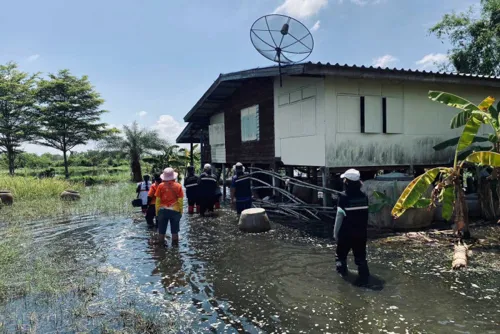
As of the department's Thursday update (15 Oct 2026), floods persist in Bangkok and 20 provinces, mostly in the Central Plains and East, though water levels are falling. 76 deaths are attributed to flooding since mid-September. Pathum Thani, Ayutthaya, Nakhon Nayok, Prachin Buri and Chachoengsao have the most families affected. If your premises, stock or delivery routes are in these areas, check access and stock losses now. The department has paid 4.12 billion baht in aid to 540,277 families so far; check whether your business qualifies for relief and register with the local district office.
▾ Hover for summary ▾ Tap for summary
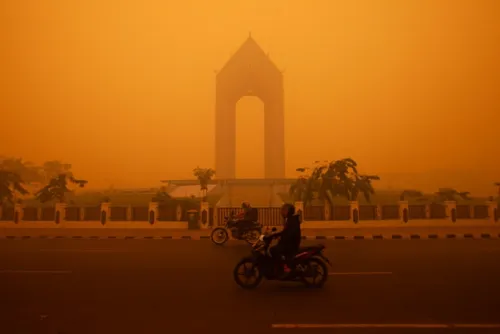
Wildfires in Indonesia, worsened by a strong El Nino drought, have pushed air pollution in Kuala Lumpur, Singapore and Dili to severe levels, with schools closed in Timor-Leste. The article does not mention Thailand. Thai businesses only need to watch this if northern or southern Thai air quality warnings begin, or if regional haze affects travel and export shipping; no action is needed from this report alone.

 Want to buy or sell a business?

▾ Hover for summary ▾ Tap for summary
The World Bank's survey finds 12% of Thai businesses actually use AI, versus 43% in the US and 23% in India. Over 80% of surveyed firms don't expect AI to raise productivity, mainly because they don't know how to apply it. Its economist says the gains come from redesigning the whole workflow, not from buying a tool for one job. For a small firm, the practical step is to pick one process you repeat every day (quoting, invoicing, stock, customer replies) and map it end to end before choosing any software. The World Bank forecasts Thai growth of only 2.3–2.4% in the next two years, so productivity matters.

▾ Hover for summary ▾ Tap for summary
Christine Lagarde, head of the European Central Bank, said at a CNN event in Bangkok that Middle East war is pushing up energy prices and the risk of oil and gas shortages in Europe. The ECB is watching for second-round effects, mainly wage increases, but has not yet seen them clearly. She gave no signal on interest rates and said policy will depend on incoming data, with the 2% inflation target kept. For a Thai SME this is background only: it concerns European policy, not Thai rates or costs. The useful signal is that energy-driven inflation is a global risk, so keep an eye on oil and fuel costs in your own budget.
▾ Hover for summary ▾ Tap for summary
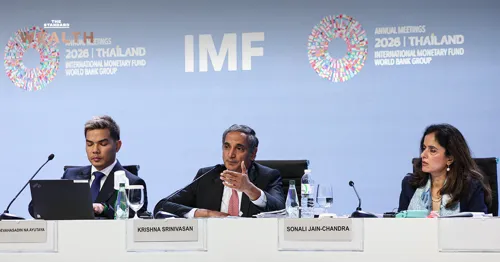
The IMF raised its 2026 growth forecast for Asia-Pacific to 4.8% (from 4.4%) and 2027 to 4.4%, driven by exports and intra-regional trade, with AI-linked tech goods leading. The IMF says ASEAN's energy intensity is about 7% of GDP, so a prolonged oil shock would push up production costs and inflation. It also warns that governments have limited fiscal room and that central banks may need to raise rates if price pressure persists. For a Thai SME, this is background: keep energy and financing costs in your budget assumptions, but no immediate action is required from this report alone.
▾ Hover for summary ▾ Tap for summary
The Stock Exchange of Thailand has told three listed companies (HPT, MVP, SAM) to file Q1 2026 financial statements by 16 November 2026. They missed the 15 May deadline. If they still have not filed, they get NC and SP marks, meaning trading is suspended and delisting may follow. Only relevant if you hold these shares or trade with these firms. For other SMEs, it is a signal to file on time: missing a filing deadline by six months can lead to delisting.
 Together GoWeGo! Ferry tickets in Thailand.

▾ Hover for summary ▾ Tap for summary
The Industrial Estate Authority of Thailand (IEAT) is reviewing estate designs after recent flooding. Under its 2014 rules, perimeter flood barriers must not block floodwater flow, must include drainage channels, and must rise at least 50 cm above the highest flood in the past 5-10 years (about 70 years for high-risk zones). Concrete walls are expected mainly in repeat-flood areas such as Samut Prakan, Phraeksa, Bang Pu and Lat Krabang. For SMEs in or near estates, expect stricter site-level flood risk checks when investing or expanding, and possibly higher land and infrastructure costs. Specific new requirements have not yet been published.

▾ Hover for summary ▾ Tap for summary
From 16 November 2026, Thailand's derivatives exchange (TFEX) moves the start of day-session trading for gold, silver, baht/foreign-currency and rubber futures from 09.45 to 08.00, with a 07.50-08.00 pre-open. Currency futures trade continuously to 16.55 with no lunch break. Night sessions are unchanged. Relevant only if your business hedges baht, gold or rubber prices through futures; otherwise no action is needed. Exporters or rubber sellers who already use TFEX may want to update their trading schedule. Details: www.TFEX.co.th or 0-2009-9999.
▾ Hover for summary ▾ Tap for summary
Brent crude has risen above $106 a barrel on Middle East tensions, and US CPI for September 2026 came in higher than expected (3.7% headline, 2.6% core). Markets now put a high chance on a Fed rate hike in December 2026. For a Thai SME, the practical signals are fuel and energy costs, and possible pressure on the baht and on borrowing costs if US rates rise. The article also notes a government housing loan scheme of THB 50,000 million at 2.6-2.8% interest and domestic travel campaigns for late 2026. Stock recommendations are not relevant to most owners.
▾ Hover for summary ▾ Tap for summary
Brent was at US$106.06 and West Texas at US$95.09 per barrel on 14 Oct 2026, both up on the day. Attacks on merchant ships in the Strait of Hormuz are continuing. IEA expects the oil market to stay in deficit through year-end, even with demand softening. US inflation came in at 3.7% for September, and markets now price a 30% chance of a US rate hike at the 27-28 Oct meeting. For Thai SMEs: plan for higher diesel and fuel costs, check freight and supplier surcharges, and expect tighter credit if rates rise.

 Stop running your company on Excel.